

Living in Texas means your dog has plenty of room to sniff, splash, and explore. But that freedom also means they could be exposed to some deadly (but preventable) diseases. Vaccinations are one of the most important things you can do to protect your dog’s health—and, in many cases, your family’s health too.
If you’re unsure which vaccines your dog really needs, or how often they need boosters, you’re not alone. Here’s the information you need to keep your pup healthy and up-to-date on their shots.
Core Vaccines: The Must-Haves
Core vaccines are recommended for all dogs, no matter their age, breed, or lifestyle. These vaccinations protect against the most contagious—and sometimes fatal—diseases we see in dogs.
1: Rabies
This is the only non-negotiable vaccine. In Texas, rabies vaccinations are required by law—and for good reason. Rabies is a deadly disease that spreads through bites from infected animals like skunks, raccoons, and bats. It is usually fatal to dogs, and it can also spread to humans.
- First dose: By 16 weeks (four months) of age
- Boosters: 1 year later, then every 1 or 3 years, depending on the type of dose
2: DHPP (also called DAPP or DA2PP)
This combination vaccine protects against four serious viruses that can spread quickly between dogs, especially puppies.
- Distemper—A contagious and often fatal virus that attacks the respiratory, GI, and nervous systems. It’s airborne and can also spread through shared food and water bowls.
- Hepatitis—Affects the liver, kidneys, and eyes. Dogs can catch it through contact with the urine or saliva of infected animals.
- Parvovirus—Causes severe vomiting and bloody diarrhea, especially in puppies. It’s highly contagious, often deadly, and can survive in the environment for months.
- Parainfluenza—A respiratory virus that contributes to kennel cough and spreads quickly in group settings like doggy daycares and dog parks.
This vaccine is given in a series:
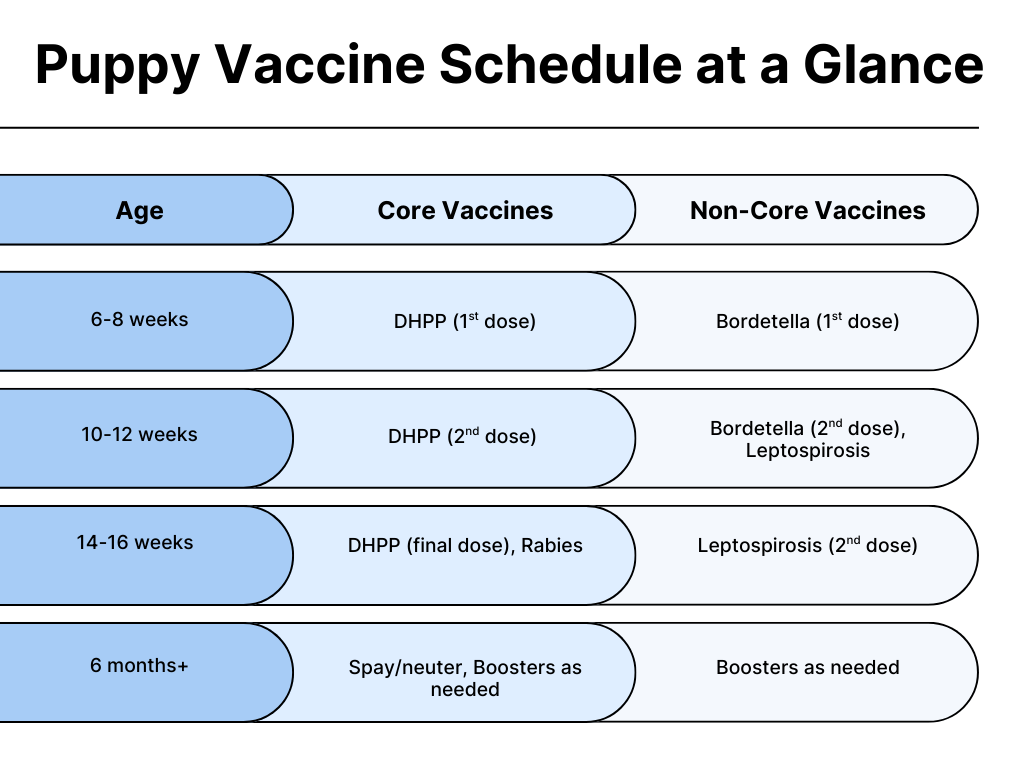
- Puppies: Series of 3 to 4 shots starting at 6-8 weeks old
- Adults: Booster every 1-3 years
Lifestyle-Based Vaccines (Optional)
Depending on your dog’s activities and environment, and whether you have children in your household, your vet may recommend some additional vaccinations.
Leptospirosis
This bacterial disease spreads through standing water, soil, or the urine of infected wildlife. Dogs can get sick from drinking or walking through contaminated puddles or lakes.
What many people don’t realize is that leptospirosis can also spread to humans. While it can make dogs very sick, it’s often even more dangerous to people. Vaccinating your dog helps protect your entire household, especially if you have a baby or toddler who might try to play in the dog’s water bowl.
- First dose: Typically given around 12 weeks, with a second dose four weeks later
- Booster: Yearly
Bordetella (Kennel Cough)
Required by most boarding facilities, daycares, and grooming salons. Bordetella is highly contagious and spreads through coughing and close contact with other dogs.
- First dose: Between 6-8 weeks
- Second dose: 4 weeks after the first dose (around 10-12 weeks)
- Booster: Adult dogs should get boosters every 6 to 12 months, depending on their situation
Canine Influenza
Yes, dogs can get the flu, and it spreads quickly in places where dogs gather.
- Recommended If: Your dog goes to day care, dog parks, or group training
- Frequency: Yearly, if needed
Lyme Disease
This disease is less common in Texas than in other regions, but it’s still a risk if your dog travels or hikes in wooded, tick-heavy areas.
- Recommended if: You travel with your dog to high-risk areas
- Frequency: Annual
Puppy Vaccinations
Puppies need to start their first dose of core vaccines by the time they’re two months old. We’ll walk you through the full schedule at your puppy’s first visit!
Why Vaccines Matter in Texas
Texas weather and wildlife create the perfect environment for bacteria, viruses, and parasites to thrive. From standing water to urban coyotes, these health risks are real and preventable. And when your pet is vaccinated, it protects other pets and people too.
Vaccinating your dog:
- Protects them from life-threatening illness
- Helps prevent outbreaks in the community
- Makes boarding, grooming, and traveling stress-free
Not Sure Which Shots Your Dog Needs? We’ve Got You Covered
At LazyPaw Animal Hospitals, we don’t believe in one-size-fits-all care. Your dog’s vaccination schedule will depend on their age, lifestyle, health history, where they spend their time, and who they spend it with.
If you live in Frisco, Northern Plano, Little Elm, or The Colony, and want to make sure your dog is protected, we’re here to help.
Contact us with any questions or to schedule an appointment. We’ll make it easy to keep your dog safe, healthy, and ready for whatever adventures Texas brings next.
Photo by Shelby Cohron on Unsplash used with permission under the creative commons license for commercial use 6/5/2025