
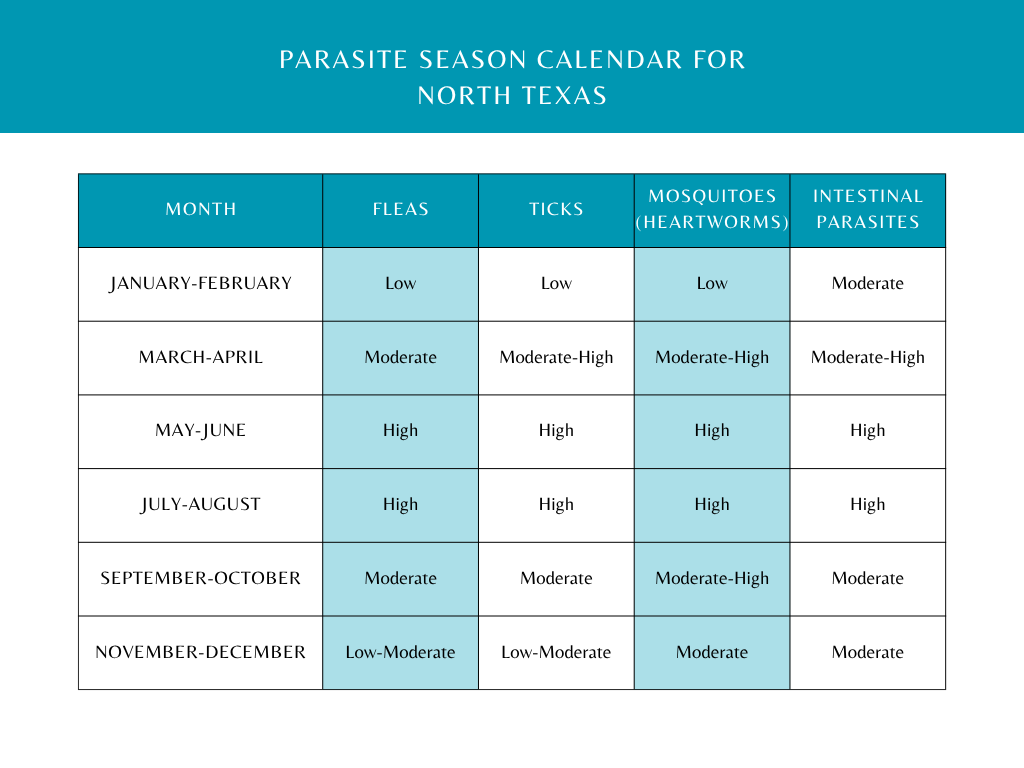
In Texas, parasite prevention isn’t optional—it’s essential. The warm climate, high humidity, and active wildlife mean fleas, ticks, and mosquitoes are a year-round problem. And while a single flea might seem like a small nuisance, parasites can cause major problems for both pets and people.
Whether you have a dog that loves the trail or a cat who stays close to the couch, parasite protection matters. Let’s take a look at why it’s important in every season.
Why Parasite Prevention Matters
Parasites don’t just cause itching and discomfort; they can spread serious diseases that affect your pet’s health and quality of life. The good news? With the right prevention plan, most of these risks are easy to avoid.
Common parasites in Texas include:
- Fleas – Cause itching, allergies, tapeworms, and anemia
- Ticks – Spread diseases like Lyme and Ehrlichia
- Mosquitoes – Transmit heartworms, which can be fatal
- Intestinal worms – Such as roundworms and hookworms, which can infect pets and people alike
Let’s go over each type of pest in more detail.
Fleas: More Than Just an Itch
The Texas climate gives fleas the perfect conditions to thrive. And once they’re on your pet, they can multiply quickly and infest your home in no time.
Fleas can lead to:
- Itching, scratching, and hair loss
- Flea allergy dermatitis (a painful skin reaction)
- Tapeworm infections
- Anemia, especially in kittens and puppies
How to prevent fleas:
- Use monthly flea prevention methods like chewables and flea collars
- Treat every pet in the household, including the indoor-only pets
- Vacuum regularly and wash bedding in hot water
Flea infestations can take weeks—or even months—to eliminate. Preventing them in the first place is much easier and far less frustrating.
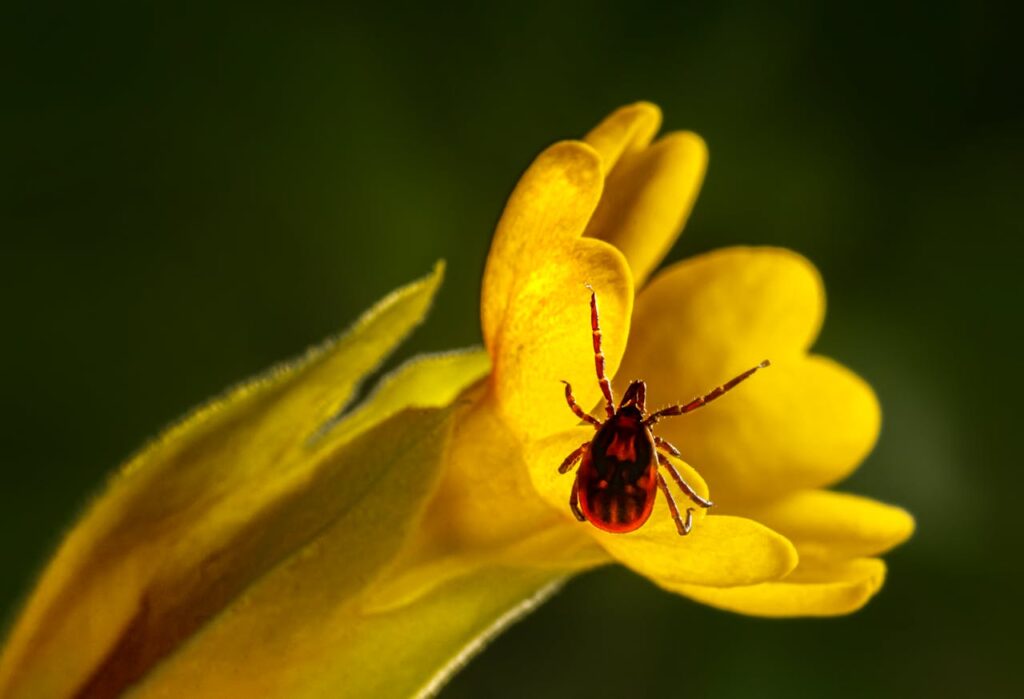
Ticks: Small Bugs with Big Risks
Ticks are active throughout most of the year in Texas. They like to hide in tall grasses, wooded areas, and even well-kept backyards. They attach to pets (and people) and can transmit diseases in just a few hours.
Tick-borne illnesses in Texas include:
- Lyme disease
- Ehrlichiosis
- Anaplasmosis
How to prevent ticks:
- Use vet-recommended tick preventatives year-round
- Check your pet thoroughly after outdoor activities—especially around ears, toes, and under the collar
- Keep grass trimmed and remove leaf litter or brush piles where ticks may hide
- Avoid high-risk areas during peak tick seasons
Because many tick-borne illnesses don’t show signs until serious damage is already done, early prevention is key.
Heartworms: Silent but Deadly
Heartworms are spread by mosquito bites—and unfortunately, mosquitoes are active nearly year-round in Texas. Dogs are natural hosts, but cats can become infected, too.
Once inside the body, heartworm larvae can grow into foot-long worms that live in the heart, lungs, and blood vessels. Treatment is expensive, risky, and only available for dogs. For cats, prevention is the only option.
Heartworm symptoms include:
- Coughing
- Fatigue
- Labored breathing
- Collapse and sudden death (in severe cases)
How to prevent heartworms:
- Give your pet monthly heartworm medications all year, even in winter
- Get your pet tested for heartworm every year
- Ask your vet if heartworm prevention is right for your cat
How to Stay One Step Ahead of Parasites
Parasite problems are stressful for pets and their people, but with the right prevention plan, you can avoid infestations, infections, and expensive treatments down the road.
The bottom line: In North Texas, year-round prevention is our best defense.
Need help figuring out the best flea, tick, and heartworm protection for your pet? We’ve got you covered. At LazyPaw Animal Hospitals, we tailor each plan to your pet’s species, lifestyle, and environment.
Contact us today to schedule a visit, and we’ll help you keep your pets safe, happy, and parasite-free.
Images used under creative commons license – commercial use (08/26/25). Photo by Erik Karits on Pexels