
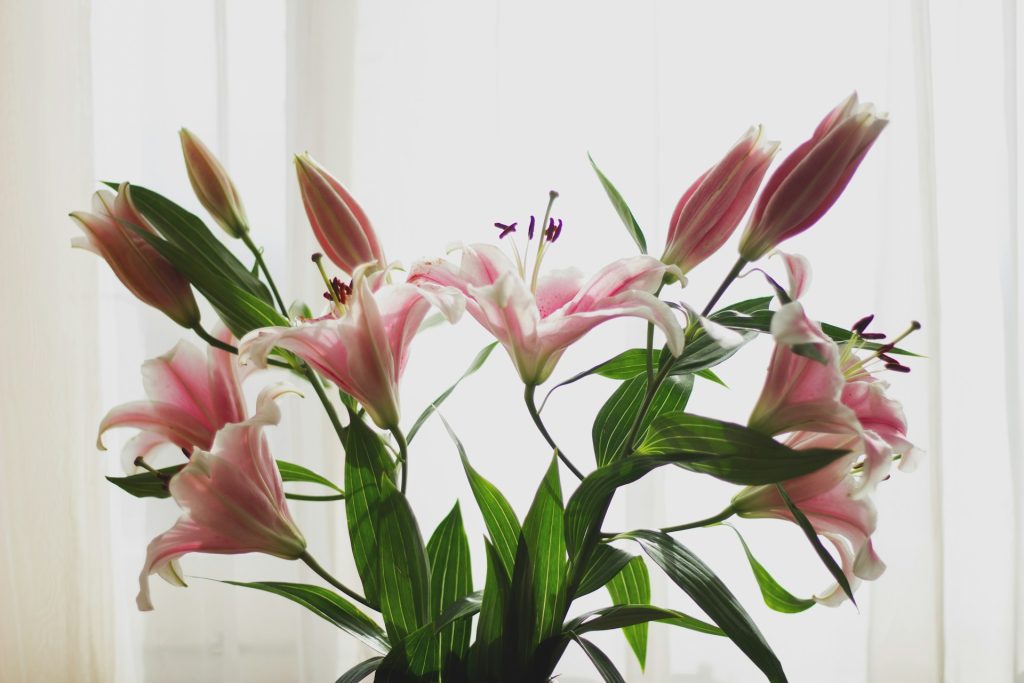
Every year, we welcome the return of spring with fresh flowers. Easter lilies on the counter, a Mother’s Day bouquet on the table, a cheerful arrangement from the garden center just because it is that time of year.
Flowers look lovely. But if you have a cat at home, a bouquet could be one of the most dangerous things in your house. Many flowers are toxic to cats, and lilies are actually deadly. Here’s a breakdown of which flowers are harmful and which ones are safe for cats.
Why Are Lilies So Dangerous for Cats?
Lilies are extremely dangerous, because every single part of the plant is toxic. The leaves, the petals, the pollen, even the water the flowers have been sitting in. A cat that walks past a lily arrangement, brushes against it, and then grooms herself could ingest enough pollen to get seriously sick.
Not every plant labeled a “lily” carries the same risk, but the ones that do are genuinely life-threatening. All true lilies (from the Lilium family) can cause acute kidney failure in cats. This includes:
- Easter lilies
- Asiatic lilies
- Tiger lilies
- Stargazer lilies
Symptoms like vomiting, lethargy, and loss of appetite can start within hours, and many owners mistake the early signs as an ordinary hairball. If your cat has been near lilies, do not wait to see how things go.
Get them to an emergency vet immediately because lilies are deadly to cats. If treatment is delayed more than 18 hours from the time a cat ingests part of a lily, kidney damage can become fatal. That is not a very wide window. You cannot wait even a single day.
Lilies cause fatal kidney failure in cats. Call your vet or the ASPCA Poison Control hotline if your cat needs help.
5 Flowers to Avoid If You Have Cats
Spring and early summer bring a lot of flowers into our homes and yards. If you have a cat, then you need to be careful about the types of flowers you buy.
Here are the top five flowers to avoid if you have cats:
- Easter lilies, tiger lilies, Asiatic lilies, stargazer lilies, and daylilies (all highly toxic)
- Lily of the valley (causes heart problems, not kidney failure, but still very dangerous)
- Tulips and hyacinths (the bulbs especially)
- Autumn crocus (can cause organ failure)
- Daffodils (can cause severe stomach upset and, in large amounts, worse)
These are not rare plants. They show up at florists, in grocery store bouquets, garden centers, and doorstep deliveries constantly at this time of year. But as long as you know which flowers are safe and which are toxic, you can protect your cat from poisoning.
Which Flowers Are Safe for Cats?
The good news is that besides lilies, tulips, and daffodils, there are plenty of other beautiful flowers that are safe for your cat.
Roses are a classic choice and, while the thorns are a concern for curious paws, the flowers themselves are not toxic. Sunflowers, orchids, snapdragons, and gerbera daisies are also cat-friendly. If you want to give flowers to someone who has cats, or you just want to bring some spring inside without the risk, those are your best options.
The ASPCA’s pet-safe Mother’s Day bouquet guide is a useful resource to bookmark at this time of year, especially if you plan on giving floral arrangements as gifts. If you plan on planting flowers in your garden, cat-friendly plants like daisies, marigolds, and petunias are your best bet.
What to Do If Your Cat Got into a Lily
Are lilies deadly to cats? Absolutely, and they are more common in our everyday lives than most people realize.
If you think your cat has chewed on a lily or even just rubbed against one, treat it as an urgent situation. Do not wait for symptoms to appear. Call your vet or the ASPCA Poison Control hotline at 888-426-4435 right away. Time is the most critical factor in whether or not a cat recovers from lily exposure.
Talk to the LazyPaw Team
If you have questions about plant toxicity, what to do in a pet emergency, or just want to make sure your cat is healthy heading into spring, the team at LazyPaw Animal Hospitals is here for you. Helping sick pets is part of what we do every day.
Don’t wait for symptoms to develop! If your cat got curious about some lilies, contact us right away.
Photo by Anita Jankovic on Unsplash with permission under the Creative Commons license for commercial use 3/28/26.
