
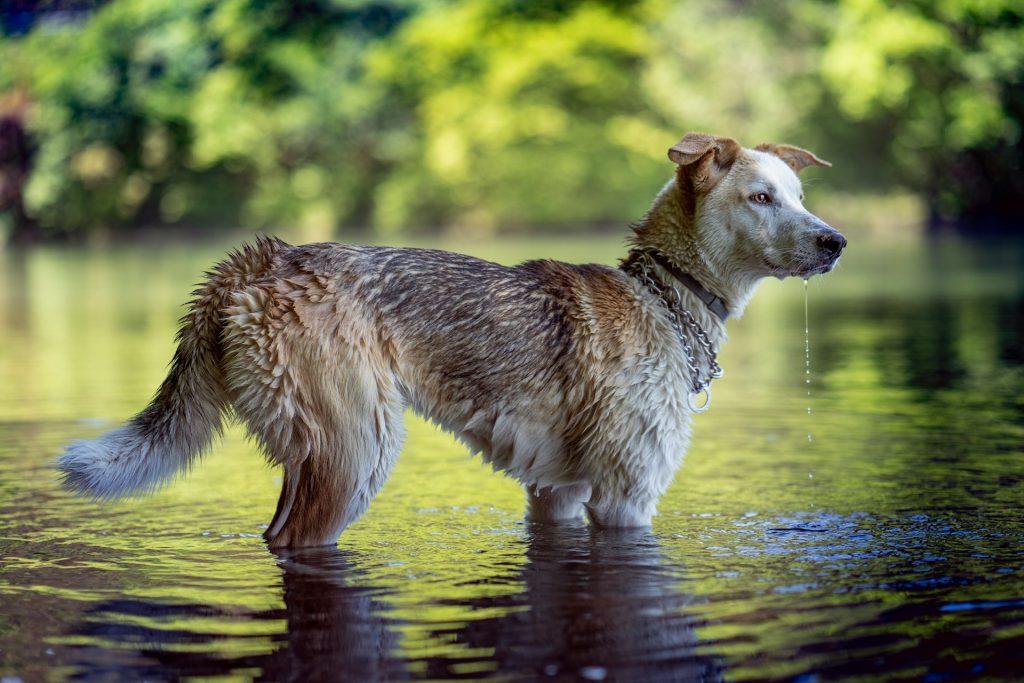
It happens on almost every unleashed walk. Your dog spots a puddle or a trickling creek, darts toward it, and starts lapping up water before you can even react. It looks harmless. They’re thirsty, there’s water, problem solved. But letting your dog drink out of puddles or creeks is riskier than it looks. Here’s why.
What’s Actually in That Puddle
Natural water sources might look clean, but they’re usually not.
Puddles collect runoff from roads, lawns, sidewalks, and drainage systems. That means fertilizers, pesticides, motor oil, and animal waste can all be sitting in that shallow pool your dog is about to drink from. Even a puddle in a quiet neighborhood can carry more contamination than it appears.
Creeks, ponds, and lakes carry their own risks. Wild animals interact with those water sources and leave behind bacteria and parasites that your dog can pick up with a single drink. And some of these infections can be life-threatening.
Water-Borne Diseases That Affect Dogs
Two of the most common water-borne illnesses dogs pick up from natural sources are leptospirosis and giardia, and both come with serious consequences.
Leptospirosis is a bacterial infection spread through water contaminated by the urine of infected animals, including rodents and wildlife. Dogs can contract leptospirosis by drinking from lakes, streams, and rivers as well as any shared water source, like a water bowl at the dog park.
Once leptospirosis enters the bloodstream, it can damage the liver, kidneys, and central nervous system. It can be fatal, especially for puppies.
Giardia is a parasite that’s very common in natural water sources. It causes diarrhea, vomiting, and weight loss, and is often difficult to clear completely. Limit your dog’s access to creeks and ponds to prevent both infection and reinfection.
Is It Safe to Let Your Dog Drink From a Creek?
Even a clear, fast-moving creek isn’t safe. Moving water still carries bacteria and parasites, especially in areas where other animals have access. There’s no way to tell from looking whether water is contaminated. It can appear perfectly clean and still make your dog seriously ill.
This matters even more if your dog isn’t fully vaccinated. Vaccines exist for leptospirosis and reduce the risk significantly, but no vaccine covers everything.
What to Do Instead
- Bring water from home. A collapsible bowl and a bottle of fresh water take up almost no space and completely eliminate the risk of your dog drinking from unknown sources. Make it part of your routine on any walk longer than 20 or 30 minutes.
- Stay away from shared water bowls in public spaces. Shops and dog parks might mean well, but shared water bowls are highly risky, especially for puppies and unvaccinated dogs.
- Keep your dog leashed in wilderness areas, after heavy rains, and whenever you know there’s a pond or creek nearby. Even if you’re in an off-leash area, your dog will be safer if you can keep them from accessing standing water.
If Your Dog Shows Symptoms of an Infection, Call Our Frisco Vets
Drinking contaminated water probably won’t cause immediate symptoms, but watch your dog closely in the days after. Vomiting, diarrhea, lethargy, and loss of appetite can all be signs of infections. Don’t ignore those symptoms! If they last more than 24 hours, it’s time to see a vet.
It’s always better to bring your dog in sooner rather than later. Our care team can run diagnostics and get your dog on the right treatment quickly. And when you’re dealing with deadly diseases like leptospirosis, time is of the essence.
You can contact us to make an appointment any time, or just let us know you’re on your way. We always reserve time for walk-ins and urgent appointments. Just come by our clinic at 7380 Stonebrook Parkway in Frisco, and we’ll see your pet right away.
Photo by Monika Simeonova on Unsplash with permission under the Creative Commons license for commercial use 6/14/26.